
Firmstone delivers:

Firmstone provides complete car park surface solutions, including high-performance protective coatings, trafficable membranes and economical shotblast etch and seal finishes.

We assess the condition of your concrete, traffic demands and project requirements to recommend a system suited to your site and budget.

From surface preparation and repairs through to line marking and safety installations, we coordinate the work around site access and operational needs to minimise disruption and deliver a durable, practical finish.
Benefits of Epoxy Flooring

  • Durability: Epoxy flooring can withstand heavy machinery, high foot traffic, and frequent impacts, making it perfect for demanding industrial and commercial environments.
  • Chemical Resistance: It offers superior protection against chemicals, oils, and other potentially damaging substances, ensuring longevity even in harsh conditions.
  • Low Maintenance: Its seamless surface makes cleaning simple and efficient, reducing downtime and costs associated with maintenance.
  • Safety: Epoxy can be formulated with non-slip additives to enhance safety, especially in wet or hazardous areas.
  • Aesthetic: Available in a variety of colors and finishes, epoxy flooring can be tailored to match a company’s branding or desired aesthetic while maintaining functionality.

Applications of Epoxy Flooring

Epoxy flooring is a versatile solution suitable for various commercial and industrial settings, including:
Warehouses

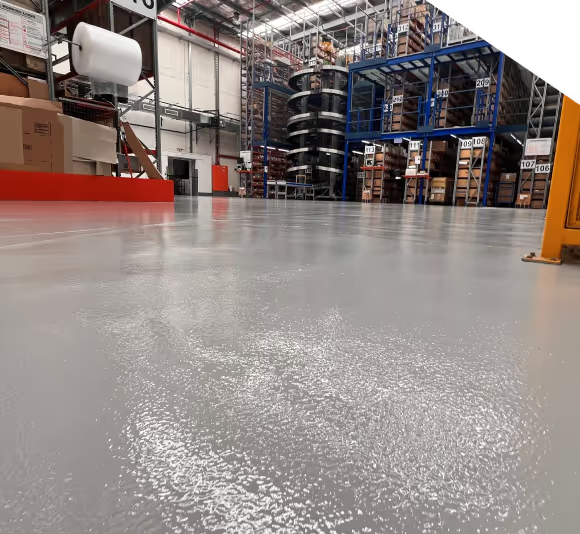
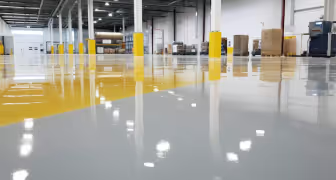
Withstands heavy loads, forklifts, and consistent traffic without cracking or damage.
Factories

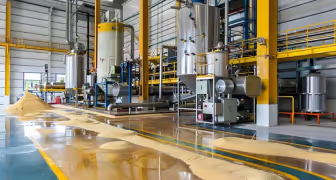
Protects floors from chemicals, oil spills, and wear due to heavy equipment.

Commercial Kitchens

Provides a hygienic, easy-to-clean surface resistant to spills and bacteria growth.

Showrooms

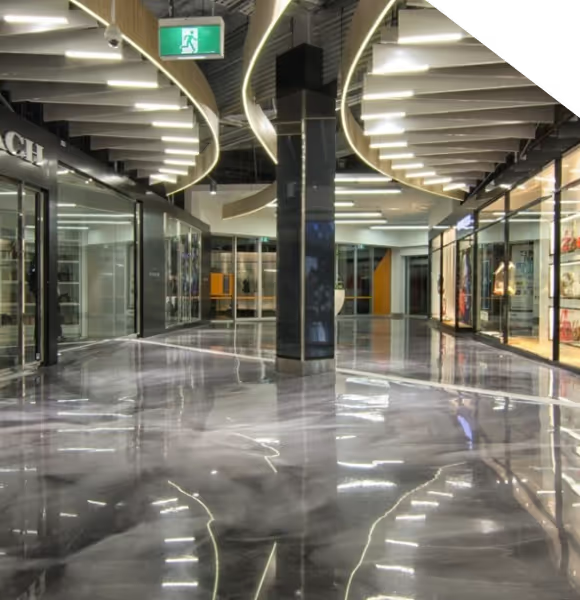
Offers a high-gloss finish that enhances the visual appeal of retail or exhibition spaces.
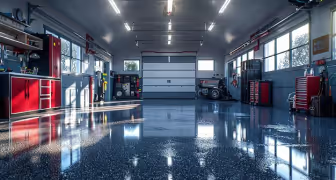
Garages & Auto Shops

Resists oil, grease, and other automotive fluids while providing a durable surface for vehicles and tools.

Warehouses

Withstands heavy loads, forklifts, and consistent traffic without cracking or damage.

Epoxy Flooring Process

Our epoxy flooring process ensures precision and attention to detail at every step:

Surface Preparation

01

We start by cleaning and preparing the existing concrete floor, ensuring it’s free from dust, debris, and moisture. This includes grinding or shot blasting the surface to create a proper profile for the epoxy to bond effectively.

Priming

02

A primer coat is applied to seal the concrete and improve adhesion. This layer acts as the foundation for the epoxy.

Epoxy Application

03

The epoxy resin and hardener are mixed and applied evenly over the floor. Multiple coats may be added depending on the required thickness and durability.

Final Finishing

04

Once fully cured, optional finishes like anti-slip additives or additional protective topcoats can be applied.
Contact Us

Get in Touch with Our Specialists

Thank you! Your submission has been received!
Oops! Something went wrong while submitting the form.
Blogs

Check Out Our Latest Blogs

Calcium Chloride Testing: Is Your Floor Ready?

Calcium chloride testing is a vital step in assessing a concrete slab's readiness for covering materials. The test measures a slab's moisture vapor emission rates by placing a pre-weighed calcium chloride disc under a sealed sheet for 24 hours. The accumulated weight helps calculate vapor emission rates, which ideally range between 3-5. Technicians must adhere to specific protocols to ensure accurate results, which include meticulous surface preparation and maintaining the test setup for 60-72 hours.

How to Test Epoxy Bond Strength on Floors

Epoxy bond strength on floors are assessed using specific tools and protocols to ensure adherence to industry standards. Measurement tools include tensile testing machines, peel strength test devices, and surface preparation tools. To determine if a surface is ready for epoxy bonding, technicians conduct various tests such as moisture testing, visual and tactile inspections, pH testing and surface roughness measurements. Pull-off testing, following ASTM D4541 guidelines, measures the epoxy's bond strength by applying a controlled force on the surface.

5 Best Calcium Chloride Tests For Epoxy Floors

Calcium chloride testing is crucial for successful epoxy floor installations by providing data on subfloor moisture levels. The test requires a very specific environment, with temperatures between 65-75°F and a humidity of 40-60% for roughly 72 hours. Equipment selection, meticulous test site cleaning, and adherence to test setup are key steps to ensure accurate results. These results inform whether the concrete meets manufacturers’ moisture level requirements for epoxy installation. If moisture levels are too high it can lead to coating failure and decreased floor longevity.